MENU

Laboratory for Electronic Structure and Molecular Spin Modelling (ESTLab)

Logo EST-Lab

Group Overview

Led by Prof. Matteo Briganti, EST-Lab operates at the cutting edge of computational chemistry, condensed matter physics, and quantum information science. Based at the University of Florence, we specialize in the multi-level in silico simulation of magnetic molecules, ranging from single-molecule magnets (SMMs) to molecular spin qubits (MSQs) and open-shell nanographenes.

Our work is defined by a synergistic approach: we combine advanced wavefunction-based methods, periodic Density Functional Theory (pDFT), and emerging Artificial Intelligence (AI) techniques to predict, rationalize, and engineer the quantum properties of matter at the atomic level.

The "Ab Initio" Compass

The realization of quantum devices requires materials with strictly controlled intrinsic properties. Magnetic molecules offer a unique platform for this technology - "plenty of room at the bottom" - where properties can be tuned by modifying metal ions, coordination geometry, and ligands.

However, navigating the "mesoscopic jungle" of molecular magnets requires precise guidance. Our group acts as the computational compass for experimentalists. We do not just rationalize experimental data; we drive discovery by predicting how molecular systems will behave when adsorbed on surfaces, exposed to electric fields, or integrated into nanodevices.
Key Research Lines

1. Nanographenes & AI for Quantum Gates (FIS Starting Grant)

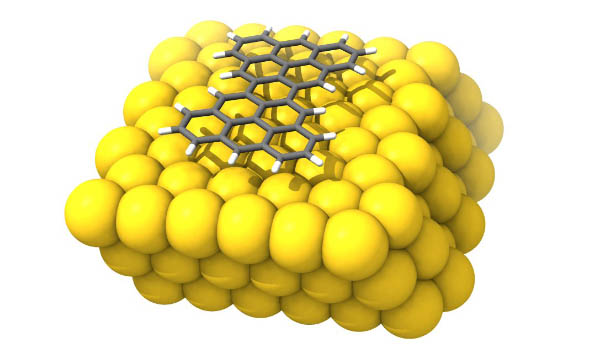
This is our newest and most ambitious research line. We are designing quantum gates employing open-shell nanographene structures. By combining ab initio methods with Artificial Intelligence, we aim to engineer carbon-based nanostructures with specific magnetic ground states suitable for quantum logic operations. This project represents a leap forward in the search for scalable, molecule-based quantum computing architectures. This project is funded by the Italian Science Fund (FIS - "Italian ERC") starting grant project "iPAWNS".

2. Molecular Qubits on Surfaces

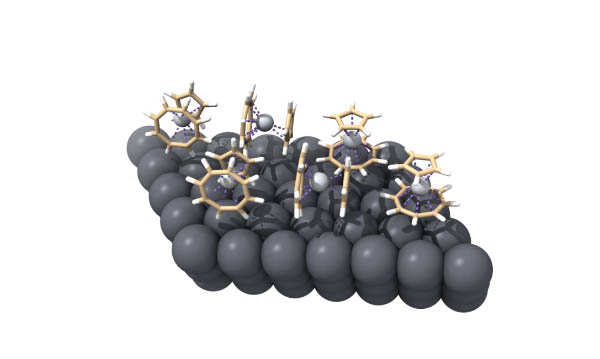
To realize practical devices, molecular qubits must be organized on substrates without losing their quantum coherence. We model the complex interplay between Molecular Spin Qubits (MSQs), specifically metallocenes and various surfaces (e.g., superconducting Pb(111), gold): https://pubs.rsc.org/en/content/articlelanding/2024/sc/d4sc03290j. Our periodic DFT simulations guide the engineering of interfaces that preserve spin coherence and control spin delocalization in single molecules and molecular monolayers: https://www.science.org/doi/10.1126/sciadv.adu0916.

3. Fundamental Lanthanide Magnetism & Dynamics

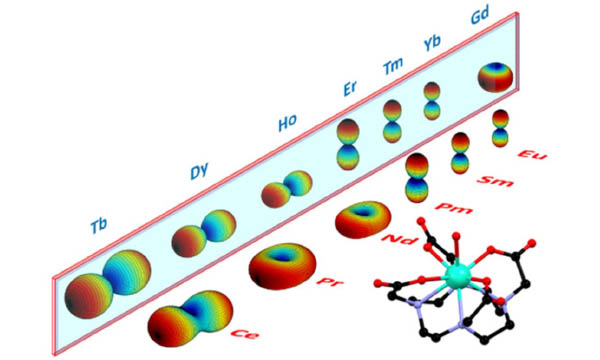
We possess deep expertise in modeling the static and dynamic properties of Lanthanide-based Single Molecule Magnets (SMMs). By multiconfigurational methods (CASSCF), we perform ab initio modeling of magnetic anisotropy to design SMMs that operate over a wide temperature range. For instance, our results established the "f(n+7) rule," proving that lanthanides differing by seven f-electrons exhibit identical magnetic anisotropy orientations: https://pubs.acs.org/doi/10.1021/jacs.1c02502. We also explore exchange coupling in polynuclear and heterospin systems containing rare earths (2p-3d-4f).

4. Spin-Electric Coupling & Multifunctionality

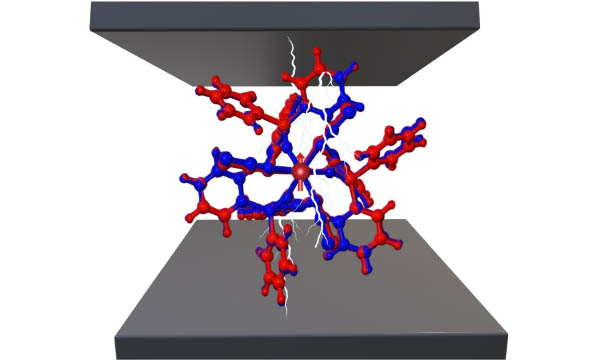
Using multiscale techniques, we also investigate how external stimuli, such as electric fields and light, can manipulate quantum states. These models are paving the way for molecules that can be controlled by electric fields or light, which are essential for initialization, addressability, and scalability of future spintronic devices. Within this framework, our research has recently identified a large spin-electric coupling in chiral dysprosium complexes: https://pubs.acs.org/doi/10.1021/jacs.5c10840.


Cookies

I cookie di questo sito servono al suo corretto funzionamento e non raccolgono alcuna tua informazione personale. Se navighi su di esso accetti la loro presenza.  Maggiori informazioni