
Postdocs
Dr. Lorenzo Mariano
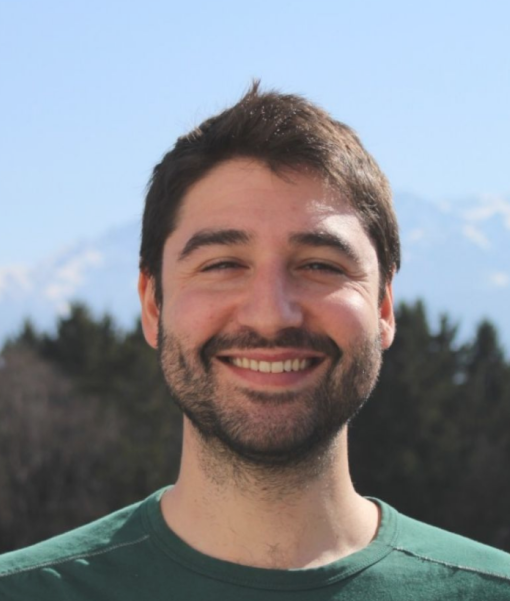
Lorenzo Mariano obtained his Bachelor’s and Master’s degrees in Physics from the University of Bologna. He then moved to Grenoble, where he completed his Ph.D. in 2021 at the Science et Ingénierie des Matériaux et Procédés (SIMaP) laboratory under the supervision of Dr. Roberta Poloni and Dr. Marc De Boissieu, focusing on the computational description of spin-crossover processes. After a one-year postdoctoral fellowship in the same team, funded by the CNRS EMERGENCE INC program, he was awarded a Marie Skłodowska-Curie fellowship and joined the Quantum Materials Dynamics group at Trinity College Dublin, led by Prof. Alessandro Lunghi. In 2025, he joined Prof. Matteo Briganti’s group in the Laboratorio di Magnetismo Molecolare (LaMM) at the University of Florence, working on nanographene systems. His current research focuses on excited states and spin dynamics in organic- and metal-based molecular magnets, as well as on the discovery of new compounds using machine-learning and high-throughput computational approaches.
Dr. Jacopo Lupi
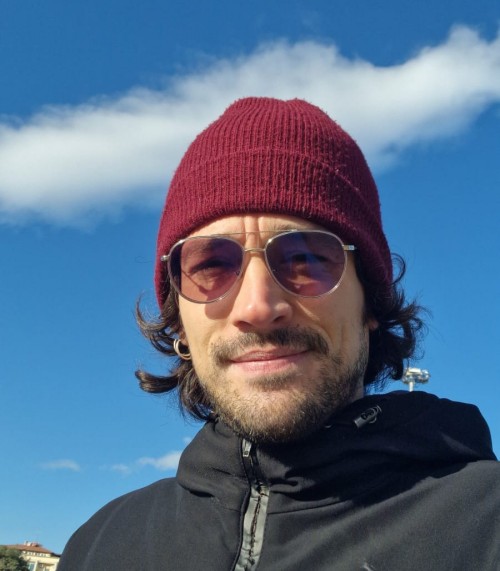
Jacopo Lupi earned his B.Sc. (2015) and M.Sc. (2017) in Chemistry from the University of Florence and completed his Ph.D. (2022) in Methods and Models for Molecular Sciences at Scuola Normale Superiore in Pisa under Prof. Vincenzo Barone. He focused on the development and application of quantum-chemistry-based composite schemes for accurately modelling chemical reactions relevant to atmospheric and astrochemistry. He then joined Trinity College Dublin (2022–2024) as a Postdoctoral Researcher in Prof. Stephen Dooley’s Low Carbon Technology Group. He contributed to the ERC-funded Mod-L-T project, integrating quantum-chemical and data-intensive approaches to model lignocellulose pyrolysis reactivity and kinetics for renewable energy applications.
In 2025, he joined Dr. Alessandro Fortunelli’s ThC2-Lab at the Institute for the Chemistry of Organometallic Compounds (CNR-ICCOM, Pisa). Here, he developed machine-learning interatomic potentials to study the thermal degradation of protein-containing biomasses for advanced materials and renewable energy applications. In 2026, he returned to the University of Florence, joining Prof. Matteo Briganti’s group at the Laboratorio di Magnetismo Molecolare (LaMM), where he focuses on modelling the polymerization mechanisms of 1D and 2D nanographene systems.
ORCID
Dr. Emilio Lorini
Last update
21.03.2026